
|
|
|

|
|
What is Radiant Heat?
Radiant heat warms the closest and coldest mass, which radiates heat throughout that space evenly. In other words, radiant heat warms cold objects.
Radiant heat will heat the floors, tables, and people.
|
|
|
The Luxurious Comfort of Radiant Heat
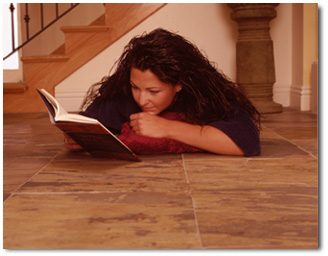 Have you ever strolled along the beach on a sunny day and felt the warm sand underneath your feet?
Have you touched a mug that was warm because of the hot drink inside? If so, then you've felt radiant heat.
Objects maintain the radiant heat until the heat source is gone, after which the heat slowly escapes to whatever is colder and closer. Have you ever strolled along the beach on a sunny day and felt the warm sand underneath your feet?
Have you touched a mug that was warm because of the hot drink inside? If so, then you've felt radiant heat.
Objects maintain the radiant heat until the heat source is gone, after which the heat slowly escapes to whatever is colder and closer.
How Electric Radiant Heat Works
When the radiant heat system is turned on, electricity is forced through the conductive heating material. For line voltage radiant heat systems,
(110 V.) of electricity is forced through the heating cable. For low-voltage
systems, the line voltage is converted to low voltage (8-30 V.) of
electricity in the control unit (which contains a step-down transformer) and
this low current is then forced through the heating element. The low-voltage
heating elements are
FloorHeat,
self-regulating heating elements. ComfortTile is the most recommended line voltage floor heating system.
The heated material then heats the flooring until it reaches the right
temperature set by the floor thermostat.
The radiant heat then passes through the floor and continues to heat other
objects in the room (tables, chairs, people). The heat will continue to heat the
room and its objects up to the ceiling. Radiant heat will give you the most
consistent room temperature from floor to ceiling compared to any other heating
system.
To view an image demonstrating the effectiveness of radiant heat warming a room
compared to a forced air or gas heating system, click on
Radiant Heat vs. Forced Air above.
|
|
|



